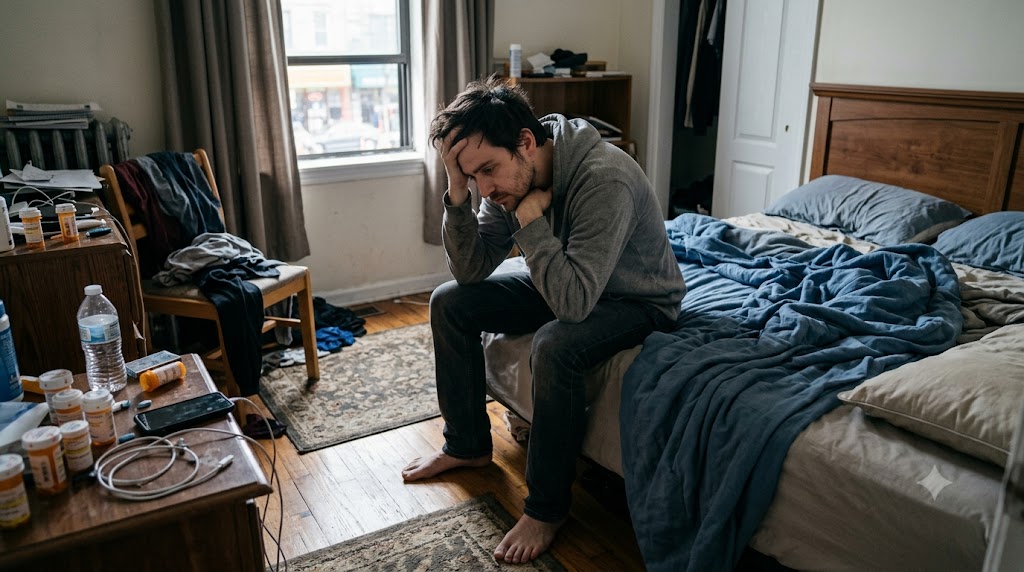
Recognizing that you or someone close to you needs assistance with their addiction can be a very difficult acknowledgement to come to. Often this realization will come to you late at night, when you are alone with your thoughts or very tired after a day filled with problems. You may trick yourself into believing that tomorrow will be different or that you will be able to manage it independently with a bit more effort. However, addiction has a way of manipulating your thoughts to the point of letting it hijack your whole life.
Once you start to question whether a simple outpatient treatment would suffice, it is likely that you have already come to terms with the fact that you need more help. Knowing when a more serious approach to treating addiction will be needed can be a matter of life and death. Inpatient rehab facilities offer a much more involved approach. Being treated in this kind of setting means that patients are living in a secure setting and have access to constant medical attention and high levels of therapy.
So here in this blog we give you proper information about 12 signs you need residential inpatient addiction treatment. Stay tuned with this blog.
Key Substance Use and Treatment Statistics

Information gathered by federal organizations such as the Substance Abuse and Mental Health Services Administration (SAMHSA) and the Centers for Disease Control and Prevention (CDC) shows that there is a major requirement for organized intervention processes.
| Metric / Indicator | Statistical Impact | Source Link |
| Past-Year Substance Use Disorder (SUD) | 16.8% of Americans aged 12+ (approx. 48.4 million people) | SAMHSA Report |
| Treatment Gap | Only 19.3% (about 1 in 5) of those needing treatment actually receive it | SAMHSA Survey |
| Co-Occurring Disorders | 33.0% of adults (86.6 million people) experience both mental illness and an SUD | SAMHSA Data |
| Annual Drug Overdose Toll | Estimated 69,973 fatalities nationwide in 2025 | CDC NCHS |
12 Signs It is Time for Residential Inpatient Treatment

Honest reflection is required to realize when the behavior that was once a habit has become a serious dependence. The 12 signs listed below are indicative that you or your family member needs to move beyond outpatient treatment.
1. Chronic Relapse After Outpatient Care
If you have undergone outpatient group therapy, individual counseling, or attempted to quit drugs on your own only to relapse shortly afterward, your brain might benefit from a more supervised setting. Outpatient programs do not offer protection from the stress of daily living, whereas inpatient programs provide a safe environment in which to learn effective and lasting coping skills.
2. Experiencing Severe, Dangerous Withdrawal Symptoms
Detoxifying from alcohol, benzodiazepine or severely dependent opioids alone can be extremely uncomfortable and in many instances can pose significant biological risks. Attempting to detoxify without professional assistance will result in experiencing seizures, DT’s (delirium tremens) and extreme cardiovascular risk. In-patient facilities offering 24 hour, medically supervised detox programs will help keep you safe as you attempt to overcome your addiction.
3. Your Entire Day Revolves Around the Substance
When addiction takes full control of your mind, the whole process of drug use becomes a troubling cycle of finding the right drugs, hiding your money, getting high, and suffering from its aftereffects. When that happens, it becomes clear that quitting requires residential treatment.
4. Rapidly Declining Physical and Mental Health
Addiction can be evidenced in both physical and mental aspects. The evidence of addiction in the human body is shown through abrupt weight loss or gain, skin ulcers, a plethora of diseases, short-term memory issues, liver problems, or early stages of paranoia and depression.
5. Your Current Home Environment is Filled with Triggers
Healing in the same area where one became ill can be a daunting task. If one daily grapples with substance abuse, lives with addicted people, or is exposed to drugs at their doorstep, the only reasonable solution seems to be moving to another place where one can start healing.
6. Neglecting Major Financial and Professional Responsibilities
Missing important deadlines at work, getting terminated due to constant absenteeism, failing out of school, or running out of money in order to pay for an addiction should all sound alarm bells. When the desire to achieve a drug high overshadows the instinct for survival and financial wellbeing, it means that you need an external structure.
7. Co-Occurring Mental Health Disorders (Dual Diagnosis)
According to SAMHSA, millions of people face dual diagnosis, which refers to a condition in which an individual simultaneously suffers from an illness like clinical depression, PTSD, or bipolar disorder and addiction. Outpatient systems do not often solve both problems simultaneously and allow for cross-triggering of the symptoms. On the other hand, inpatient care is able to treat both conditions simultaneously and does so through an integrated approach of combining psychiatric and addiction medicine.
8. Pushing Away Loved Ones and Social Isolation
Are you deliberately staying away from family gatherings, ending relationships with childhood buddies, or hiding away in your room for days? Addiction survives in silence. By purposefully isolating yourself to hide your drug-abusing behaviour from loved ones, you know that addiction has taken complete control over your life.
9. A Massively Increased Chemical Tolerance
If you observe that the quantity of a substance that previously provided you with pleasure or relief now has no effect, it implies that your brain chemistry has undergone a significant change. Increasing your dose to cope with the tolerance will expose you to a very high risk of accidental overdose.
10. Legal Troubles and Reckless Behavior
Driving while intoxicated (DUI), legal actions for the possession of illegal drugs or engaging in very risky sexual or physiological activity while intoxicated are indicators that your judgment is already impaired. When you no longer care about the risk of imprisonment or physical harm inflicted due to drug use, often the legal system intervenes when treatment fails.
11. Hiding and Lying About Your Substance Intake
Realizing you are cutting back on the amount you are drinking, hiding your pill containers in strange places around the home, or creating stories to explain away missing time is a sign of a deeper problem. The residential treatment center gives you a place to start dealing with the guilt that drives these behaviours in a guilt-free environment.
12. You Feel Completely Hopeless and Ready to Change
Maybe the biggest clue is the internal recognition. When you look at your life and feel like you are a total failure but at the same time, you have a strong wish to stop self-destructing and want to change your future, you are prepared for inpatient treatment. The moment of truth is the basis of the lifelong recovery process.
Conclusion: Taking the First Step Toward Healing

The issue of battling severe drug addiction is not simply a matter of using one’s determination to overcome the addiction; it is a disease and one that requires treatment from the medical field. The moment you accept that you require treatment from a residential facility is the moment of taking back control of your life. The best advantage of seeking treatment from a drug rehabilitation center is the absence of daily distractions, which allows you to concentrate on your recovery in the most effective way, having provided your body with all the necessary tools and resources to recover.
If you require help or know someone who needs assistance to overcome drug dependency, you should realize that there is a lot of assistance available and you only need to find it. Turning to a facility such as Harbor Detox will ensure the patients get not only qualified assistance but also the essential environment for the smooth recovery from drug addiction.
FAQs
1. How do I know if I actually need inpatient care vs. just going to therapy?
Let’s look at things this way: outpatient therapy may be a good option for you if you feel capable of recovering from your addiction while still being able to come to work, sleep in your own bed, and avoid any triggers in your own home. However, if addiction is the focus of your day, or if your efforts to quit lead to severe physical symptoms such as tremors, severe nausea, or serious mood swings, you should seek a higher level of care–inpatient treatment. Inpatient treatment provides a safe, restricted environment where you can focus on your healing.
2. Can I keep my job or go to school if I enter a residential program?
In a residential treatment program, your most important job is to get better, which will probably require you to take some time off work or school. This may sound intimidating, but in most cases your job is safeguarded by laws like the Family and Medical Leave Act (FMLA), while your medical privacy is guaranteed by the HIPAA law. Taking time off, which may last for as long as 30 to 90 days, is a risk worth taking for your health and long-term career prospects.
3. What does a typical day look like inside a residential treatment center?
Your daily schedule will have a lot of structure, which will help your brain get used to healthy habits again. The everyday schedule includes checks with health professionals, sessions either on your own or in a group, and learning opportunities. The schedule will include intervals of meals, quiet moments of contemplation, and low-pressure activities.
4. How long does inpatient treatment usually last?
The length of stay in standard residential rehabilitation programs ranges between 30 days to 90 days depending on the patient’s needs. The duration also depends on how severe the addiction is, whether detox needs to happen and the patient’s speed of progress. The required duration is determined by a clinical team that works with the patient.
5. Will my insurance cover the cost of a residential inpatient program?
Usually, yes, as health care laws require insurers to pay for mental health and substance use treatment costs. However, how much you will pay from your pocket depends entirely on your insurance plan and if the center is participating in your network. Most centers have admission departments that will check the benefit plan for free, so that you won’t have to go through the hassle of checking it yourself.
6. Can my family visit me while I am in residential rehab?
Certainly, even though many establishments adopt a short “focus period” in the early weeks of treatment, with the amount of contact being minimal in order to allow you to acclimate. Following that short time frame, the participation of family members in treatment is sought after due to scheduled visitation hours and family therapy.
7. What happens if I experience intense cravings or want to leave early?
Cravings are perfectly normal, and the medical crew is totally ready to talk to you about your feelings as they act. Even though most residential programs are voluntary, if you suddenly want to leave, the personnel will make sure that you feel alright and stay committed to recovering.
8. Can I bring my phone, laptop, or tablet?
Many rehabilitation programs introduce a temporary “digital detox” to protect patients from external sources of stress, triggers, and social media distractions. Patients must have their phones locked away, unless the facility provides limited access to telephones for them to use to speak with their immediate family members without digital distractions.