Medically reviewed by: Dr. Peter Scheid, Medical Director
The choice to become sober is a big step, but the next common question is where do I start? If you have done your research on addiction treatment, you may have come across a couple of different routes – medical detox and social detox, and maybe you have wondered which one will actually be the best for you. This is a valid question because choosing the wrong method can be the difference between a safe withdrawal and an unsafe one. In the article, we will talk about the two types of detox, who they are suitable for, and how to choose the best option.
What Does Medical Detox Actually Involve?
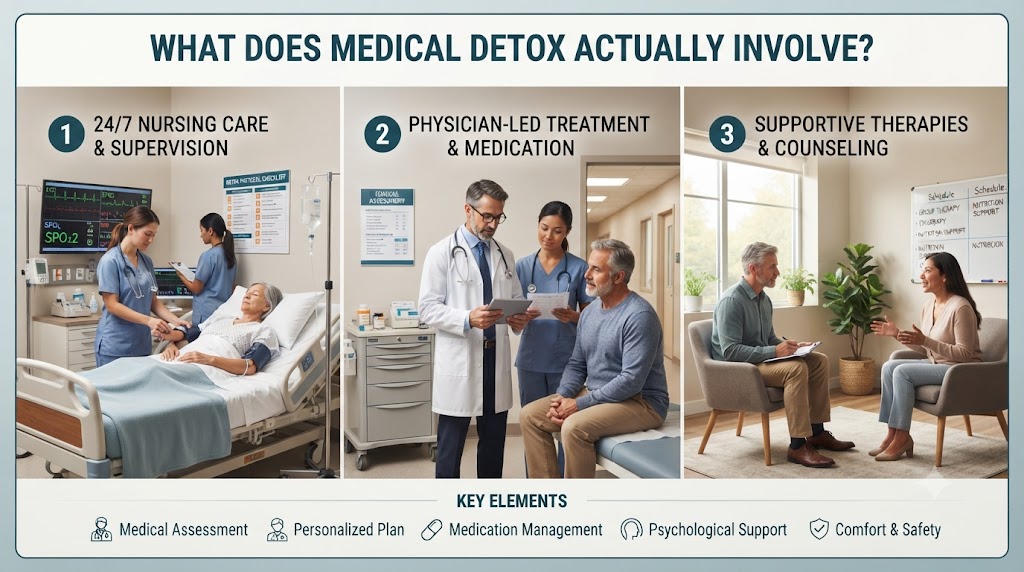
Medical detox occurs in a professional environment, in a hospital or a dedicated detox center, under the supervision of medical professionals who monitor symptoms throughout the process. Medical detox is designed to help treat any symptoms you’re experiencing, sometimes with medication, to minimize pain and prevent relapse. Medical detox includes the following:
- 24/7 Care – monitoring and assessments conducted by nurses, doctors and other licensed clinicians.
- Medication-assisted treatment – medications used to curb cravings and lessen the severity of withdrawal Symptoms.
- Constant monitoring of critical vital signs including heart rate, blood pressure and temperature.
- Emergency services available should complications develop.
- A safe setting – protected from external triggers.
This is particularly important for substances like alcohol or benzodiazepines that can lead to life-threatening withdrawal if not carefully monitored.
What Does Social Detox Look Like?

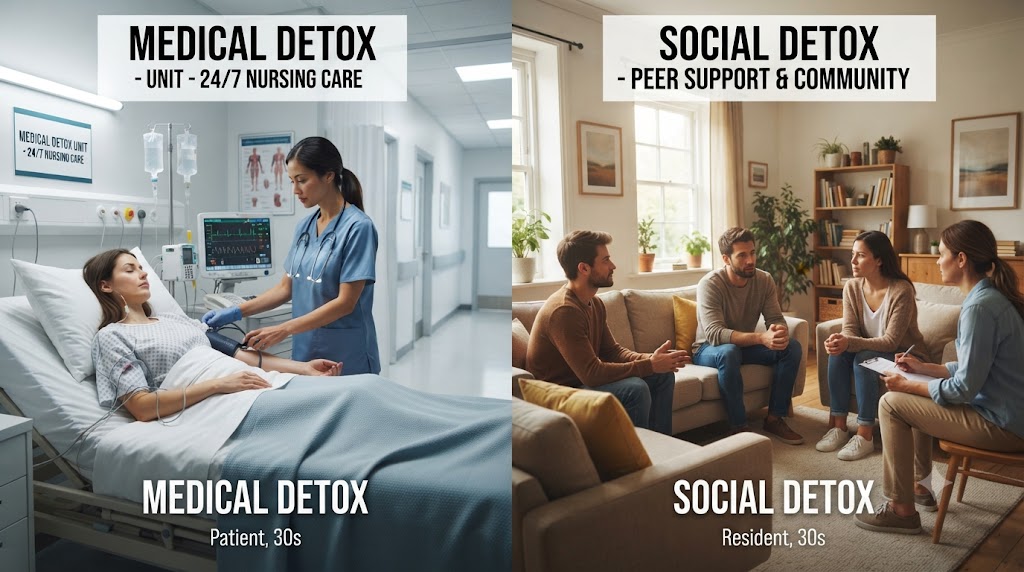
Social detox, also known as “social model detox,” is a more relaxed type of detox. Rather than using medication to guide someone through withdrawal, social detox may use therapist or peer support to help the individual through their withdrawal experience. Patients are usually in a substance-free environment and may even be monitored for potential complications.
The environments in social detox facilities typically include:
- A safe and comforting place to recover
- Counseling by peer groups
- Monitoring of basic medical aspects without hospitalization
- Psychological support
- An affordable option to traditional detox
The model works best for cases where prospects for uncomfortable withdrawal exist but health problems are not present.
Which Type of Detox Is Right for You?

The right choice really comes down to a few personal factors. Consider the following before deciding:
- What substance is involved? Some substances carry a higher risk of dangerous withdrawal symptoms, which usually calls for medical supervision.
- How long and how heavily has the substance been used? Longer or heavier use often increases withdrawal severity.
- Are there underlying health conditions? Heart problems, mental health conditions, or other chronic issues may require closer medical oversight.
- Has withdrawal been attempted before? A history of complicated withdrawal is a strong signal that medical detox is the safer route.
- What does support at home look like? Someone with a stable, sober support system may do well with a social model, while someone without that safety net may benefit from a more structured setting.
The most appropriate method is to speak with a doctor or drug addiction expert who can address the concern personally, since they can analyze individual risk factors that aren’t clearly visible.
Why the Right Detox Setting Matters
If you’re thinking about treatment, you may also be deciding between a medical detox or a social detox. If you’re a parent, you might decide between an emergency room and a treatment center. Of course, the best choice depends on you and your unique needs, but this decision may affect safety and long-term success.
Using a social detox without the necessary resources can lead to relapse and medical complications or an incomplete attempt at sober living. Choosing the appropriate level of care ensures the individual has the best start to entering into outpatient treatment of their choice, such as going to a treatment center or attending outpatient addiction treatment.
Final Thoughts
After all, both medical detox and social detox are necessary components of recovery, they just serve different needs. Medical detox may provide the higher level of care that is needed for individuals with more serious addiction, while social detox is designed to give a little more space and a less intense setting for those with less severe addiction. This doesn’t mean that one is more effective than the other, but it does mean that both need to be an option for those in need of help.
When in doubt, connect with experts who can examine the individual’s case and determine which scenario makes the most sense. Treatment centers like Harbor Detox provide counseling and detox options that help ensure individuals are on the right path to get the help they need.
Contact Information
- Company Name: Harbor Detox
- Phone: (888) 793-8002
- Email: info@harbordetox.com
- Address: 24832 La Paz Ave, Suite A, Dana Point, CA 92629, USA
FAQ About the Difference Between Medical Detox and Social Detox
1. How do I know if I need medical detox instead of social detox?
Honestly, it depends a lot on what you’ve been doing and for how long. If you were using a lot and you’re coming off heavy drinking, opioids or benzodiazepine use, a medical detox is probably safer since it can become dangerous pretty quickly when you withdraw from those drugs. Better safe than sorry, and the doc can help you determine your level of care by looking at your intake history.
2. Is social detox actually safe, or is it just a cheaper option?
Social detox isn’t “less safe” per se – it’s just designed to treat a different set of issues. If you’re likely to have mild symptoms and you’re otherwise healthy, a social detox is a completely safe, practical way to work through your withdrawal. The trick is ensuring it’s the right kind of care for your specific circumstances – not just the cheapest.
3. Can I switch from social detox to medical detox if things get worse?
Yes, and honestly, this is more common than people realize. If withdrawal symptoms become severe or something just doesn’t seem right, even a social detox should be able to identify when it’s time for a quick transfer to medical detox. That said, if you think your withdrawal will be severe, it may be wise to opt directly for medical detox.
4. Will I be given medication during detox?
It will all depend on which kind of detox you go through. During medical detox, medicines may be given to reduce symptoms such as anxiety, nausea, or more serious side effects associated with withdrawal. During social detox, medication isn’t really used – instead, your peers and a relaxing environment are the means of getting you through it.
5. How long does detox usually take?
There’s no one-size-fits-all answer, as it completely depends on the individual. Depending on what substance you are detoxing from, most programs are a few days to a week in length, although some people may require a bit more time if your symptoms take longer to settle. That is just the beginning, the next phase is the important part.
6. Does insurance cover medical detox or social detox?
It varies based on the provider and plan, so definitely call and confirm before you choose. Medical detox is more likely to be covered since it’s a clinical service, but some social detox programs will accept insurance or on a sliding scale. Just give the detox a call (Harbor Detox is happy to help) and ask what your coverage would be.
7. What happens after detox is finished?
Detox provides the physical process of removing substances from your body, but this isn’t a full recovery. The majority of individuals who undergo detox continue treatment afterward in the form of inpatient or outpatient rehab, therapy, counseling, or a support group to address the deeper issues of substance use. Forgetting this step is one of the leading causes of relapse.
8. Can I detox at home instead of choosing either option?
Yes, but it’s not something we would recommend doing without consulting a professional before you even begin. The process of withdrawal can be unpredictable, and the seemingly bearable until the third day can quickly become a life-threatening situation. If costs or comfort levels are the concern, then it’s worth asking a facility about a social detox, which is often less expensive than home detox.