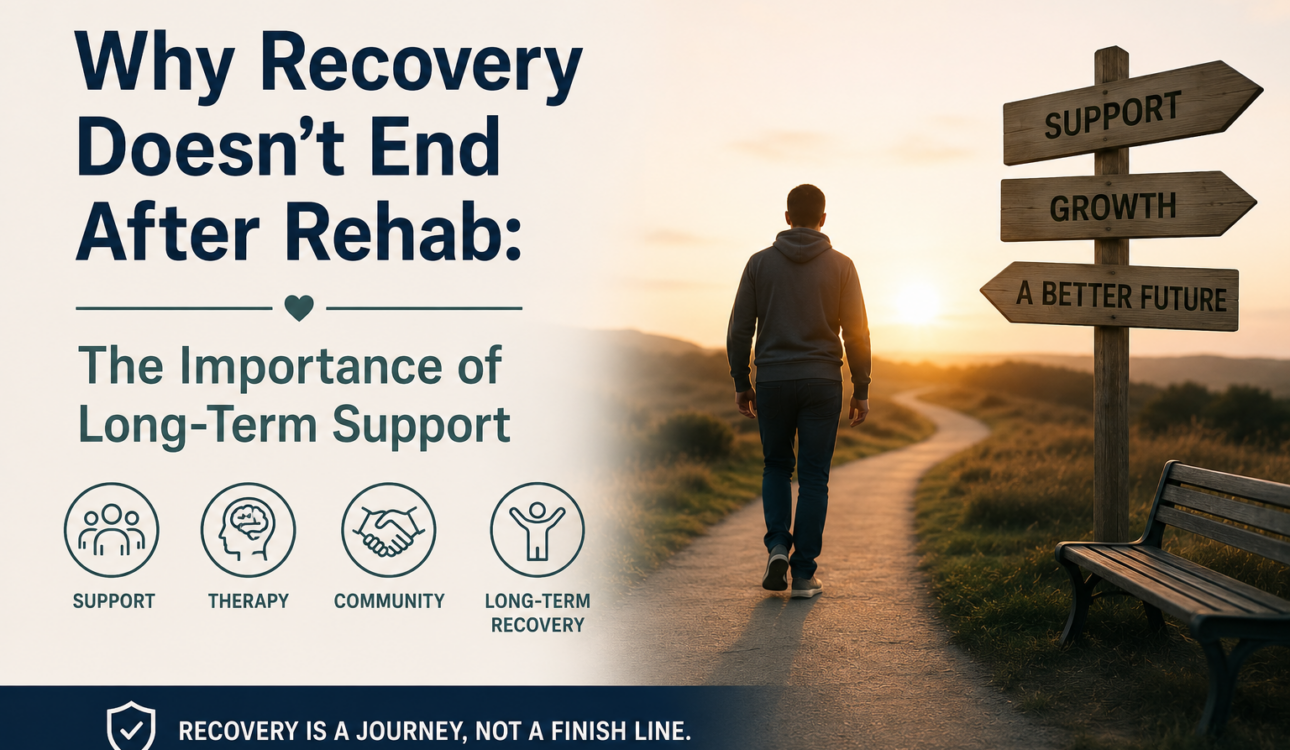
Recovery from addiction is a transformative process but finishing rehab is merely the first step. Many people think recovery ends with rehab. However, those months and years following rehab are crucial because it is the time of hardship when one will have to go through real-life situations and repetitively cope with the challenges without drugs or alcohol.
Recovery from addiction is not a matter of perfection, but rather consistent changes and development. When equipped with proper support, one will beat the odds of relapse and produce a wholesome future.
In this blog, we will talk about Why Recovery Doesn’t End After Rehab: The Importance of Long-Term Support.
The Ongoing Challenge of Recovery

Addiction, like other health issues like diabetes or high blood pressure, is seen as a long-term condition. While it is possible to treat these issues effectively, people run a significant risk of relapse if they do not continue to follow up with continued medical care and professional guidance. During rehabilitation, patients are taught how to understand the nature of addiction, acquire healthy coping methods, and build positive life skills.
But when people return home after treatment ends, there are going to be triggers and challenges such as the job, finances, family duties, and social life (particularly social life where substances are being used) that make people feel alone and vulnerable.
That’s why ongoing care following rehab is so crucial: because life’s stresses alone can be too much for a recovering addict, and they need a system in place to deal with them.
Transitioning Out of Rehab Can be Difficult After leaving Rehab

After leaving rehab and transitioning to day-to-day life can be challenging. During rehab there’s a schedule filled with therapies, support groups, and structure that may not be there after leaving.
After leaving rehab many recovering individuals feel an overwhelming sense of:
- Loneliness
- Anxiety
- Lack of confidence
- Temptation to socialize with old friends or visit old hangouts.
- Difficulty going back to a normal lifestyle
Because this is a critical time of recovery, having continued support systems can assist recovering individuals in successfully returning to life after rehab.
Why Do I Need Long-Term Treatment?
Prevents Relapse
Rehab is not an instant or overnight process. It is a long-term addiction recovery. It often begins as a psychological, mental and emotional struggle that then leads to the return of the usage.
Through continuing sessions of care and support groups, these behaviors are often detected, and individuals are better able to begin addressing the substance use before it occurs and the recovery maintenance is reversed.
During continuing care sessions, regular check-ins continue with certified professionals and support groups on a consistent basis to help maintain accountability.
Encourages the Development of Healthy Habits
One of the critical elements of recovery is to eliminate negative behaviors and replace them with positive ones.
Support offered on a longer basis can foster a more regimented approach to:
- Daily exercise
- Balanced diets
- Adequate rest to assist in the sleep cycle
- Effective stress reduction
- Strategic management of our time
- The development of goals
Emotional Support for Recovery
Some aspects of your emotional well-being may come up when you’re trying to recover that were previously covered during active addiction and even denial of mental health disorders such as:
- Depression
- Anxiety
- Grief and loss
- Anger
- Guilt
- Lack of self-esteem
Through ongoing counseling and therapy sessions, clients can begin working through their issues in a safe and supported environment rather than self-medicate and relapse by turning back to drinking or using illegal drugs or alcohol.
A Long Road To Recovery: Group Therapy

There’s perhaps no other element of long-term care as powerful and impactful as recovery support groups. There is immense power in being able to sit across from others who get what having a life of addiction is like.
You will find
- Encouragement
- Help when accountability matters to maintain motivation
- The opportunity to relate on your journey
- Hope
The list goes on and it’s why so many stay in recovery meetings literally for decades.
You’re surrounded by those who will never let you feel that you’re “all alone.”
Family Support Can Heal Patients
The ravages of addiction hit the entire family. Addiction recovery support through helping family learn about
- the nature of addiction
- how to communicate with clarity about the future
- how to help them recover without helping them get sidetracked into codependency.
Most family therapy happens long after rehabilitation in helping relationships that have fractured grow together.
Continue With Therapy
Life doesn’t get any easier just because rehab has wrapped up. Having your therapist continue, you can more readily be prepared to:
- Handle a stressful day at work.
- Know how to manage your temptation.
- Help build the confidence to manage all the things.
- Patients become more emotionally intelligent and know how to regulate their emotions.
- Helps in properly solving relationship issues.
- It helps to manage childhood traumas and other issues that are unresolved.
Therapy provides a more stable recovery life that is free of addictive behaviors and also free from anxiety or stress.
Handling Triggers In Daily Life

Triggers are feelings, events, places, or people, etc that can lead someone to want to get high/drunk again.
Examples of triggers
- Stress
- Loneliness
- Parties/celebrations
- Argument/fights
- Specific locations/neighborhoods
- Old using buddies
Most long-term support programs will have help with trigger management. Not help the person run from life, but helps them build the tools to cope effectively without feeling like they need to use.
Craft a New Way of Life
Recovery means so much more than just stopping taking drugs and alcohol, however. It requires focusing on growing your world so that it would make you happy and purposeful.
If someone has been in long-term recovery, then they are more likely to have been able to:
- attend school
- hold down a stable job
- Volunteer
- create relevant skills
- Hobbies
- use techniques of fitness and mindfulness to maintain relationships that are satisfying
It can mean that one has got far too much to lose.
Treating Mental Health

Some people struggling with addiction have co-occurring mental health challenges, including:
- Anxiety disorder
- Depression
- PTSD
- Bipolar disorder
When these issues aren’t being addressed as the addiction is, the probability of relapse can increase significantly. Long-term care provides attention to both addictions as well as mental health issues to increase recovery results.
The Function Of Sober Living Homes
It may not be the most secure for someone to come right home from rehab following completion of his or her treatment program.
That’s because rehab programs include a lot of support as well as monitoring from trained experts who help somebody monitor their compulsions.
Returning to old physical and social situations might be too overwhelming. Sober living residences permit an individual to transition from full dependency in rehab back into normal life, and they generally provide
- Addiction-free residence
- Private help Community.
Commitment to Recovery Requires Accountability

It’s also a fact that accountability offers support. Someone will be checking in regularly and keeping a promise makes us stick to the plan.
The accountable people could include
- Counselors
- Sponsors
- a recovering spouse
- support members
- friends
- other recovering people
- trusted professionals in recovery.
Everyone has a Different Experience with Recovery
The recovery process will look a bit different for everybody. The aftercare for addiction is very important for the patient to recover fully. For example, for an individual in recovery they might feel best with an individual therapist each week while another could be more inspired and supported through attending peer support groups or going to family counseling.
The best plan of long-term recovery can incorporate multiple approaches for support, but the individual support needed will vary among individuals in long-term recovery. Recovery is not defined as perfect rather as taking consistent clean and sober actions while still learning from mistakes the person has faced in recovery.
Summary
The Road Ahead Rehabilitation sets you on the first crucial step of the journey to a fulfilling sober life, but it isn’t by any means the last one! Real sober living is an ongoing effort far beyond rehab and therapy. You face trials every day, both expected and unexpected – each will test your commitment, your strength and your resolve. Don’t measure success by being through with rehab – measure it through your dedication to continue healing, growing and living sober, every day. With the necessary support, recovery is not an option; it is a future of freedom & possibility!
Harbor Detox is a top recovery center that provides professional facilities for people to get rid of their addictions. They have a professional setup for people to get the best out of them.
Harbor Detox Contact Information
Website: Harbor Detox
Contact Page: Contact Harbor Detox
Phone: (888) 793-8002
Email: info@harbordetox.com
Address: 24832 La Paz Ave, Suite A Dana Point, CA 92629, USA
Frequently Asked Questions
1. Why does continued recovery care need to go beyond the rehab?
While rehab creates the ground for recovery, continuing care allows for people to overcome ongoing obstacles of their everyday lives and remain sober.
2. What are different forms of long-term recovery care?
Forms of long-term care can consist of continuing therapy sessions, support groups, sober living homes, recovery coaches, family counseling and continued medical care.
3. How does recovery support help prevent relapse?
Support groups offer accountability, courage, peer support and coping tools that promote prolonged sober states.
4. Is relapse an indication of unsuccessful treatment?
No. Recovery often involves relapse and continued seeking of treatment can allow for recovery individuals to get back on track.
5. How long does a recovering person need to continue on the recovery support journey?
The timeline varies by person. Many may need months or even years of recovery support to achieve the most sober and lasting long-term success.
6. Which post-rehab issues can be the biggest hurdle to overcome?
Stress and addiction triggers have a new relationship and job finding, and healthy lifestyle habits. The list continues. These can be triggers and can be tough to manage.
7. How can I stay motivated after leaving rehab?
Celebrate small victories and concentrate on your main goals to help maintain momentum. Lean on your support system, whether it’s friends, family, or another recovery group, to help you stick to your commitment to sobriety.
8. Will I feel overwhelmed leaving rehab?
Many recovering people feel anxious, worried, or unsure about how life after rehab will play out in the real world. While these feelings are perfectly normal, many can ease as you continue counseling, establish consistent, healthy routines, and develop a strong support system.
9. Are hobbies beneficial in long-term recovery?
Absolutely. Engagement with healthy hobbies, like playing an instrument, reading a book, gardening or painting, can significantly reduce mental stress and anxiety, keeping you engaged with positive experiences that detract from substance use.
10. What if I encounter people encouraging substance use?
Always set healthy, consistent boundaries and avoid places where you might be at risk of succumbing to peer pressure. Your close contacts should be those who actively acknowledge and promote your recovery journey.
11. How is self-care during substance abuse recovery beneficial?
Consistently prioritizing self-care, which can mean eating nutrient-rich meals, getting adequate sleep and exercising daily, helps create a mental framework conducive to recovery. Making the effort to manage stress is key to developing resilience, which is a cornerstone of successful long-term recovery.