Medically reviewed by: Dr. Peter Scheid, Medical Director
When it comes to the choice of a certain level of addiction treatment, one often feels confused when comparing inpatient residential detox and outpatient care. Both options can be vital for recovery; however, there are great differences regarding supervision, organization, medical services provided, and overall commitment to the treatment process.
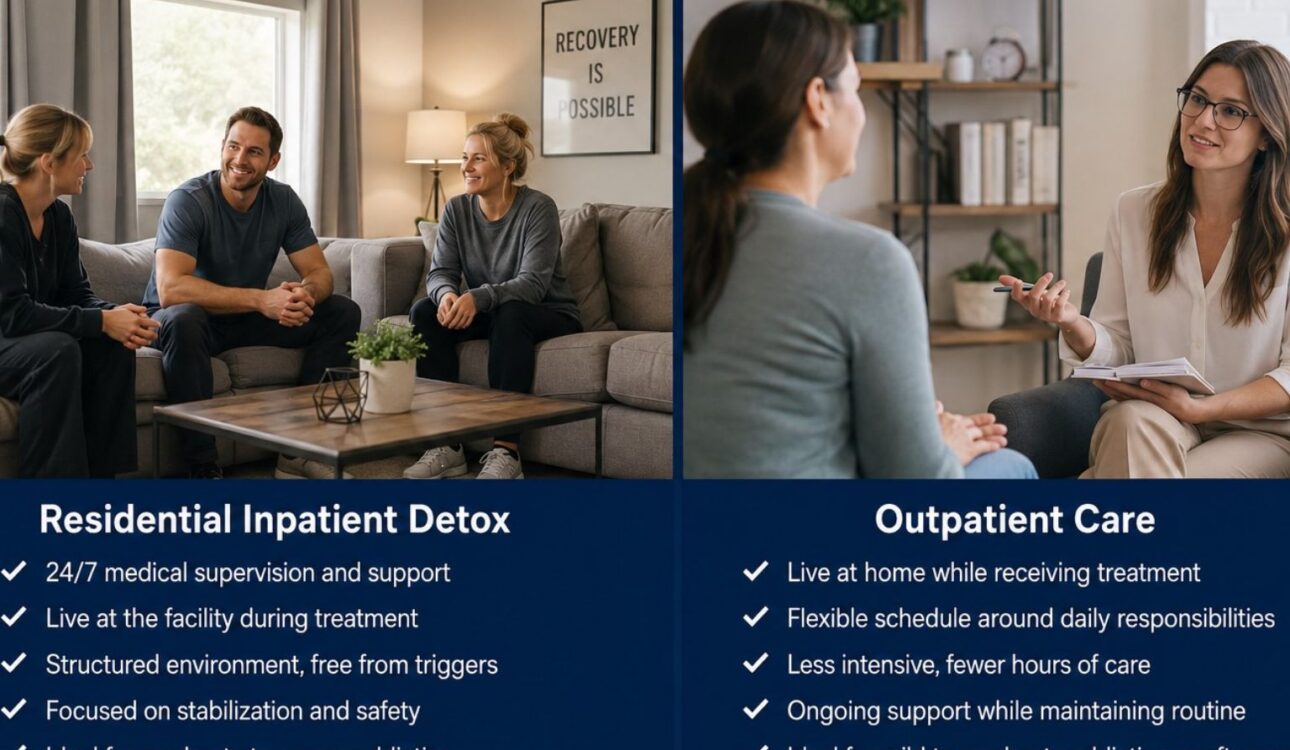
Thus, what is the difference between residential inpatient detox and outpatient treatment? The main aspect that distinguishes these two options is related to the place of treatment and the level of support provided throughout the entire process of withdrawal.
Residential Inpatient Detox vs. Outpatient Care
Residential inpatient detoxification treatment aims to provide patients with a safe and supportive environment where they can go through withdrawal and early recovery stages. Thus, unlike outpatient treatment, the patient stays at the treatment center instead of going back home. Depending on the particular program and medical needs of the individual, it can include constant monitoring and supervision, clinical treatment, medication, counseling, and recovery planning.
Residential detoxification, according to SAMHSA, is characterized by 24-hour observation and monitoring of people suffering from the effects of intoxication or withdrawal.
Outpatient detoxification, on the other hand, enables people to remain in their homes and visit treatment centers for specific time periods. While outpatient treatment can be made up of short visits, some programs offer several hours of treatment per week (intensive outpatient programs – IOPs).
Key Differences in a Nutshell
| Factor | Residential Inpatient Detox | Outpatient Care |
| Living arrangement | Patient lives at the treatment facility | Patient lives at home |
| Supervision | 24-hour support may be available | Support occurs during scheduled visits |
| Environment | Structured, recovery-based setting | Home and community environment |
| Daily responsibilities | Fewer outside distractions | Work, school, and family duties may continue |
| Withdrawal monitoring | More continuous observation | Monitoring occurs during treatment visits |
| Best suited for | People needing greater structure or support | People who can safely manage treatment while living at home |
| Recovery environment | Removes many everyday triggers | Needs managing triggers at home |
| Flexibility | Less flexible during residential stay | Generally more flexible |
The correct level of care must be chosen on the basis of an individualized clinical assessment. Factors such as withdrawal, needs regarding health issues, psychological and social stability, and security are among the criteria used to make decisions, according to SAMHSA guidelines.
Why Choose Residential Inpatient Detox?
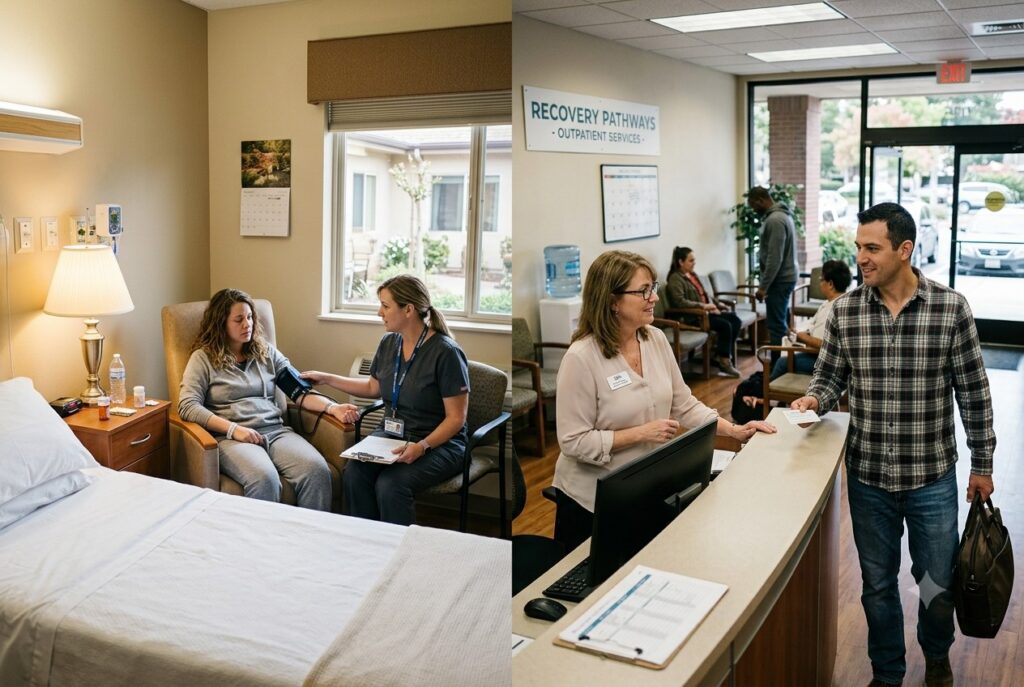
A significant advantage of residential detoxification, or residential detox from alcohol, is the absence of daily stresses and temptations. For instance, a person who is addicted to substances may meet people, places, things, or routines related to drug or alcohol consumption. Avoiding these things during the process can be helpful.
Residential treatment provides structure. It is much simpler for patients not to have to deal with their regular life when going through withdrawal.
Another important factor to consider is the level of support. Depending on the type of facility and the level of care, residential programs offer medical supervision, nursing care, counseling, peer contact, and help with further stages of treatment.
Some people need more medical support because of the complexity of their withdrawal risk factors. SAMHSA describes different levels of detoxification, from ambulatory outpatient detox up to medically monitored and medically managed inpatient detoxification.
How Outpatient Detox Works
Outpatient detoxification treatment might be the appropriate treatment choice for those patients who have mild withdrawal symptoms and live in a supportive environment. Instead of overnight hospitalization, a patient goes to appointments for assessment, treatment, monitoring, counseling, and medication management when it is required by the clinical picture.
The main benefit of the approach is its flexibility. A person can continue working, attending school, taking care of their family, and fulfilling other obligations.
However, an outpatient program requires more responsibility outside of treatment. A person should be able to stick to treatment, attend appointments, stay away from harmful substances, and live in a supportive environment. Outpatient treatment is especially reliant on the availability of certain factors like transportation and a supportive environment.
Which Treatment Approach Would Suit You Best?
It depends. The choice between an inpatient and an outpatient treatment approach must be made taking into account a person’s medical history, the drug they took, how long they have been using it and the intensity of its use, experience of withdrawal, their physical and psychological well-being, home circumstances, and support.
If a person had a lot of withdrawal symptoms in the past, if they lack home support, or if it is difficult for them to stop taking the drug, then they would do better in a more controlled environment. In other cases, they might be able to go through the process in an outpatient setting.
It is particularly important to understand that one cannot rely on the information provided online to assess the safety of the withdrawal syndrome. Withdrawal from alcohol or some drugs like benzodiazepines can be dangerous and require the help of a medical specialist.
Conclusion
Understanding the difference between the two types of treatment approaches might help make an informed decision when choosing an addiction treatment method. While residential care entails a more structured live-in arrangement that provides more ongoing support, outpatient care entails flexibility for those who are capable of receiving treatment while still living in their homes.
Harbor Detox provides residential inpatient treatment and detox programs that are based on individual recovery requirements. The residential inpatient program by Harbor Detox provides a structured atmosphere for patients to heal themselves and establish a strong base for their future recovery.
FAQs
What is residential inpatient detox?
The residential inpatient detox treatment program is a live-in treatment program whereby an individual stays in a facility and is provided with the necessary support while undergoing the detoxification process and early stages of recovery. Depending on the program, it may include medical examination, withdrawal support, counseling, medication support, and a recovery plan.
What is outpatient detox?
Outpatient detox treatment entails treatment without the need to stay in the facility while receiving treatment. It ranges from clinical appointments to more intensive treatment options, which entail several hours of treatment each day.
Is it safer to detox in a residential facility than in an outpatient setting?
It is not necessarily the case for everybody. What makes for the safer choice would depend on the specific clinical needs of the person. Those people who have stronger withdrawal symptoms would need more medical supervision, and other people can do outpatient detoxification after being properly evaluated.
Am I allowed to work during my outpatient treatment?
Yes, you often can. One of the benefits of undergoing outpatient detoxification is its greater convenience regarding work, studying, or family commitments. Of course, there is a certain regimen that will be followed.
How long does residential detoxification take?
There is no fixed time period for the detox process. It all depends on the substance, frequency and intensity of drug abuse, health conditions of the patient, and their withdrawal reactions.
Is detoxification enough to cure addiction?
No, it is not. Inpatient and outpatient detoxification is meant to address the process of withdrawal and stabilization of the patient. Addiction requires other types of treatments, such as behavioral therapy, counseling, relapse-prevention strategies, medication when required, and continuous recovery support.
What comes after detoxification?
Depending on one’s personal circumstances, treatment options such as residential rehabilitation, partial hospitalization, intensive outpatient care, outpatient therapy, medication treatment, and others may be suggested. It all depends on the patient’s needs and goals of treatment.
What should I do to decide whether inpatient or outpatient treatment is suitable for me?
First of all, one needs to have a professional evaluation conducted by an experienced treatment provider who will assess your withdrawal experience, health, and other factors.