Medically reviewed by: Dr. Peter Scheid, Medical Director
Finishing Detox Was A Major Event- but if you’re being real, you’ve already accepted it wasn’t the end. It’s the very beginning. Now that you’ve cleaned out the body, you still need a robust support system for your mind, behaviors and lifestyle that will ensure you get, and stay, standing.
So many people who successfully get through detox experience exactly this combination of elation and trepidation-feeling good about the job you completed but wondering… now what? The reassuring truth is you’re not on your own. Here’s a primer on the many options for aftercare to take you from being ‘detoxed’ to ‘recovering’.
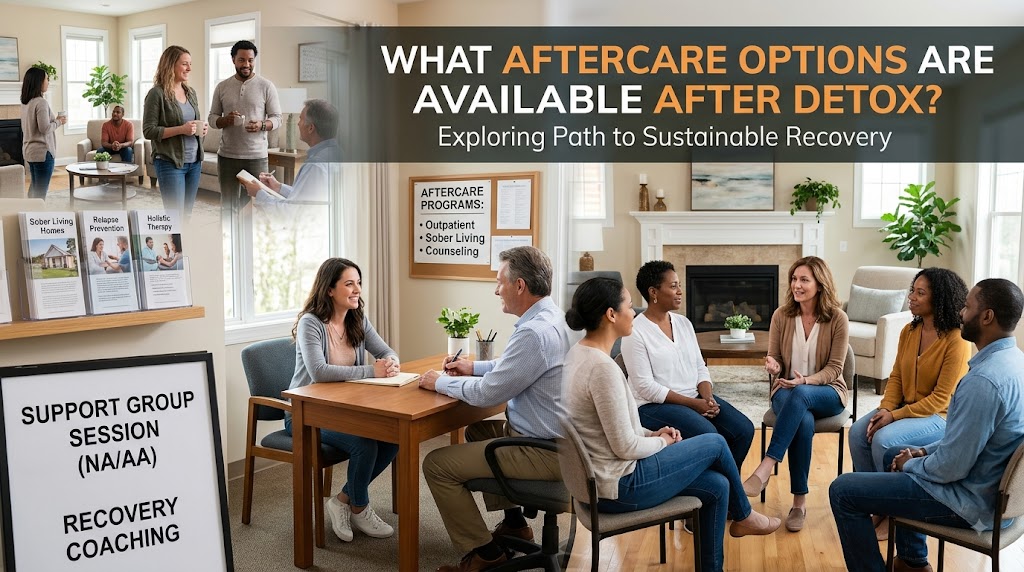
So, in this blog, we give you proper information about what aftercare options are available after a detox. Stay tuned to this blog.
Why Aftercare Matters More Than People Expect
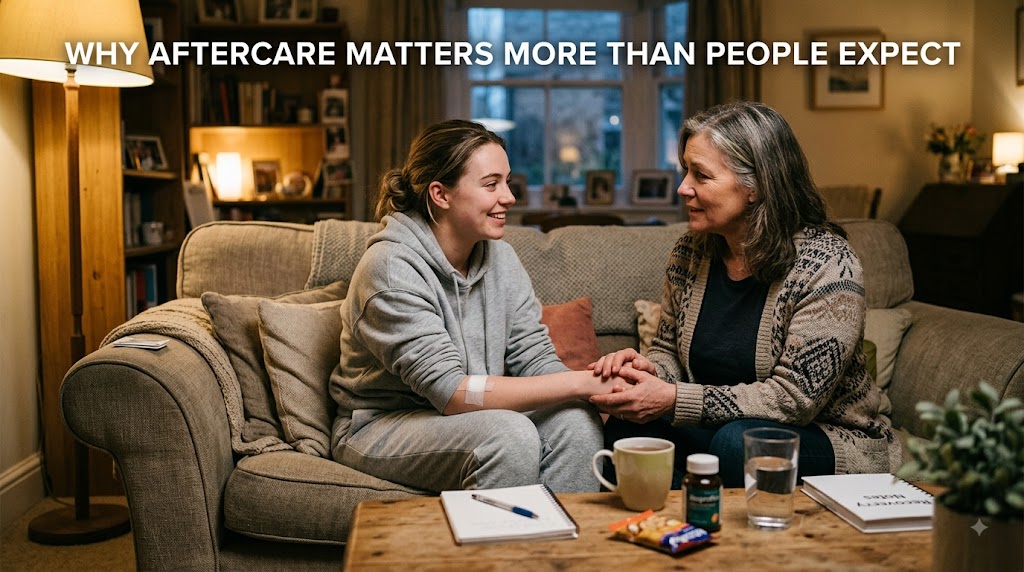
During detox, you’ll get through the physical part of withdrawal, but what about all those mental habits, triggers, and emotions associated with using in the first place? Without something in place post-detox, your risk of going back to substance use will skyrocket, even in the week or weeks following the program. That’s where aftercare comes in. When it comes to recovery, aftercare provides you with a system to support you after detox, while you and your brain/body are still recovering (which often takes months, not days).
Inpatient or Residential Treatment for Deeper Support
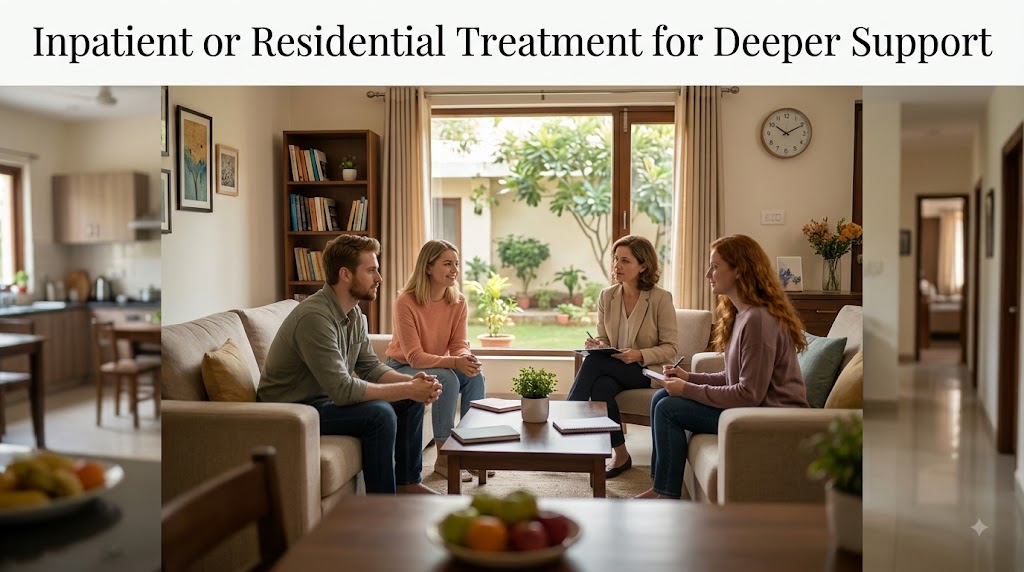
For some people, particularly those with a longer history of substance use or also suffering from a co-existing psychiatric condition, jumping into a Residential Treatment program following detox is the right choice. Residential treatment programs require you to live at the facility for a period of weeks to a few months, where you will engage in daily therapy sessions and medical supervision and be kept completely sober. In doing so, it eliminates any outside stimuli that may interfere with your focus on developing a foundation for recovery prior to going home.
Partial Hospitalization Programs for Structured Daytime Care
Partial hospitalization, often abbreviated as PHP, occurs somewhere between being treated and staying as a resident and being an outpatient treatment. PHP typically involves several hours a day for a few to many days of the week for medication, therapies, skills building, check-ins, medical assessments at a facility, then going back to living at your home or a halfway house. Great if you require a great deal of support with your disease however still wish to exercise independence.
Intensive Outpatient Programs for Flexible Recovery Work
Further, an Intensive Outpatient Treatment Program-or IOP-pulls things back more, but remains remarkably useful as real and supportive treatment. Usually, participants attend just a few sessions a week for several hours at each sitting and receive instruction and support regarding individual therapy, group therapy sessions, and relapse prevention strategies. An Intensive Outpatient program is great for anyone who still must be employed, continue with educational, work or caregiving responsibilities for family while remaining within a continuum of care.
Standard Outpatient Counselling for Ongoing Maintenance
After the more heavy interventions of the aftercare stage are completed, normal weekly or bi-weekly outpatient counselling can help you maintain throughout your sober life. Therapy sessions at this level could include focusing on how to handle stress, mental health and any particular life issues stemming from your current journey. The touch is softer, but you will still have someone reliable in your corner while your life carries on being complicated.
Sober Living Homes for a Supportive Transition
Transitioning straight out of a treatment center into your old surroundings might be a shock, particularly in the event that old surroundings somehow played a part within you’re abusing substances. Safe living rooms provide homes, a center for individuals with problems where there are house group rules, accountability among peers and a community surrounding many people who are going toward sobriety, alongside with out-patient take care for people hoping to get back in their lives in an orderly style.
Peer Support Groups for Community and Accountability
Groups like Alcoholics Anonymous, Narcotics Anonymous, SMART Recovery, or any number of other peer-led support groups provide something that is very difficult for formal treatment to imitate: connection with individuals who truly get what you’re experiencing. Scheduled meetings offer accountability, shared experience and a feeling of community, helping to foster long-term sobriety while diminishing isolation.
Medication-Assisted Treatment for Certain Substance Use Disorders
Specifically for opioid use disorder and alcohol use disorder, treatment utilizing medication-assisted therapy or MAT as part of your aftercare can serve as a great addition to any recovery plan. Medications ranging from acamprosate to naltrexone to buprenorphine, and when paired with counselling, help ease withdrawals and maintain a balance within the body, giving you an ability to more effectively focus on behavioural improvements within your recovery plan.
Building a Personalized Aftercare Plan That Actually Fits

The reality is that there is no one right way to do aftercare, there’s a right blend for your lifestyle, your circumstances at home, your community support and just for the way your brain and body are coping with the fact that you’re detoxed. Quite commonly, people do multiple and decrease over time, with the time of their stability and confidence.
Final Thoughts on Choosing the Right Aftercare Path
Detox isn’t the conclusion of your recovery journey – it’s simply chapter one. Each of the above options is here to serve as your support as you write your future chapters, providing structure in your everyday lives, treatment at your convenience while continuing your regular life, or support by surrounding you with other recovering addicts. Harbor Detox is here to help you understand the most beneficial treatment for you, and with their assistance, you can get connected to appropriate aftercare treatment, so you do not have to go through this journey alone.
Harbor Detox Contact Information
- Company Name: Harbor Detox
- Phone: (888) 793-8002
- Email: info@harbordetox.com
- Address: 24832 La Paz Ave, Suite A, Dana Point, CA 92629, USA
FAQs
How soon after detox should I start aftercare?
Honestly, the quicker, the better. Typically treatment facilities advise that after a client has completed detox, he or she enters treatment directly. Most of the time this means that the client moves on to the facility that the rehab Center may be aligned with or one you select – PHP program, in-patient rehabilitation, IOP facility. Your first two weeks outside of detox offer you one of the most challenging times of recovery where relapse is a strong possibility, having a subsequent course charted can make all of the difference.
Do I really need aftercare if I already feel fine after detox?
That is a very good question; it is also many people’s attitude immediately after going through detox. You are clear, you feel a sense of accomplishment for a while. Perhaps you are wondering now that you have no need for substances, this should not be a problem. However, detoxification helps with withdraw, the substance has to leave your body, but the patterns, stimuli, and emotions have not gone anywhere and only aftercare will help you to cope.
What’s the difference between IOP and PHP, and how do I know which one I need?
It depends-sort of think of PHP on one side, and IOP on the other. PHP, you’re in the facility for the majority of your day, a good number of days a week. IOP, it’s a bit lighter; you’re at the facility a couple of hours, a few times a week, so it works best when people have jobs or families that they need to take care of. If you’re unsure, that’s actually one of the better things to talk about with a treatment counsellor because of your history and current state.
Can I go straight home after detox instead of doing a program?
Yes, you can but it’s dangerous with nowhere to go. It’s best to even have a support group or counselling if not inpatient. The best way to relapse into the same surroundings, stresses and habits that were the reasons for being in treatment and having no one there for support when you get home is the best chance you have of relapse.
Is sober living the same thing as rehab?
No, and that trips up a lot of people. A sober living facility is not a treatment center – it’s housing. It’s a drug free home with a structured set of rules and accountability, typically utilized while in or after finishing a rehabilitation center, while living independently.
Will insurance cover aftercare, or am I paying out of pocket?
This varies widely based on the provider and the type of plan you have so it’s probably worth calling the insurance provider directly or having the treatment center pull your benefits information. Many places, Harbor Detox for example, are willing to check eligibility for you before you make a commitment to a program, just so you don’t get hit with unexpected bills at a later time.
What if I relapse during aftercare — does that mean it failed?
No, and really don’t even consider your experience that way, either. Slipping up is extremely frequent for most individuals in recovery and it doesn’t matter any more than the gains you’ve made previously if you have a plan for how that relapse won’t lead to total relapse! Call me first as it is usually very successful.
How long does aftercare usually last?
There’s no set time frame. You may spend months going downPHP-then IOP-then outpatient counselling, for example. Or, others may get by on support groups, therapy a handful of times a year, or a similar set-up for decades. It’s hard to see recovery as having a finish line- really, it’s just managing to get to a level of support that will last as long as you need.