
Medically reviewed by: Dr. Peter Scheid, Medical Director
When people that you care about, or you, have a dependency, the first thing you may start to see is that it does not come in its own state. There is anxiety with it; depression shadows the other problem, and even old issues and traumas come up just at the wrong times. It can be exhausting to try to fight two or more problems and not have the proper plan for any single issue. The thing is that most people have this problem, it is actually called co occurring disorders, and it is not effective to treating one but leaving the mental health portion untouched, it is kind of like placing a leaky patch on a roof when it is in the middle of a storm- it does work for just a short while but it only covers, not solve, the existing damage.
So here in this blog, we give you proper information about why dual diagnosis treatment is important for long-term recovery. So stay tuned to this blog
What Dual Diagnosis Actually Means
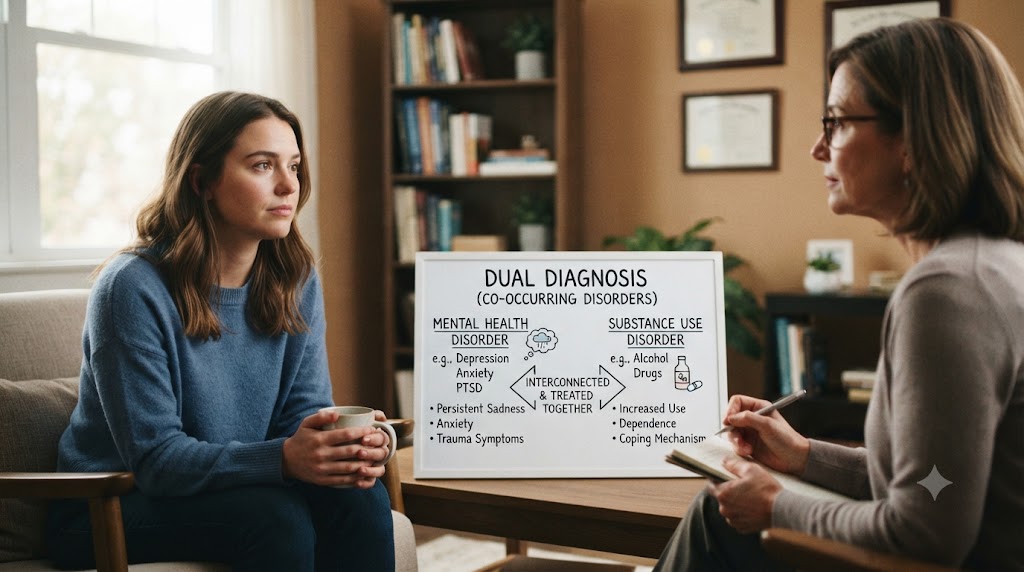
Basically, it all comes down to substance abuse plus a mental illness: that mental illness could be depression, anxiety, PTSD, bipolar disorder, etc. The substance abuse and mental illness then trigger one another in an endless cycle-e.g., someone may drink to ease their anxious thoughts but find that the drugs only bring about more anxiety as the feelings and thoughts kick in after it wears off; someone else may use stimulants to cope with the dulled mind state which depression can cause; crash is however bigger then before-neither state affects just one part of the human being, and this is in exactly why having it treated on its own tends to be unsuccessful.
Why Treating Only One Half of the Problem Doesn’t Work
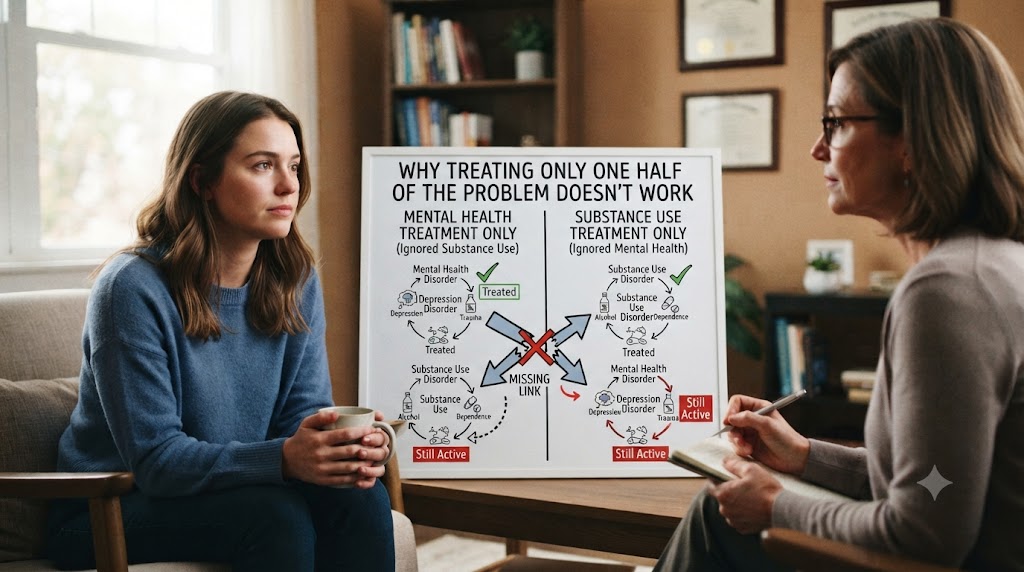
Historically, therapy has sometimes treated mental illness and addiction as two separate systems, perhaps even housed in two separate buildings and managed by two separate staffs with almost no interaction. Someone could detox from alcohol, remain sober for two weeks, and then relapse to their drug usage because the pre-existing anxiety, depression (or another underlying mental illness) that contributed to their addiction is not being treated. Without doing both together, addiction treatment and recovery then often becomes a cyclical process: detox, relapse, detox, relapse again.
How Integrated Treatment Supports Lasting Change
Mental and addiction treatment is all part of one seamlessly integrated treatment plan and one single team with dual diagnosis care. Therapists, psychiatrists and medical providers are all on the same page, tweaking a dual diagnosis person’s plan to the ever-changing circumstances for both a mental illness and a co-occurring disorder. Someone in dual diagnosis treatment may have medication management for a mental illness, therapy sessions for their issues stemming from trauma or negative thoughts contributing to addiction, and a support group to help build new, strong connections – simultaneously instead of sequentially.
The Role of Root Causes in Preventing Relapse
Long-term recovery isn’t simply removing something from a life. It’s understanding why the substance was a go-to coping method in the first place. Dual diagnosis treatment delves into the “why.”
Maybe it’s the loss of a loved one that wasn’t fully grieved, or childhood trauma that was never properly treated, or maybe it’s an underlying anxiety disorder that remained undiagnosed.
If these things are untreated, the chance of the individual’s reliance on a substance continues to rise, because the pain wasn’t actually treated, it was simply “numb.” A person battling dual diagnosis with an integrated dual-diagnosis approach gains healthy coping mechanisms and has alternatives for stress.
Building Skills That Extend Beyond Treatment
The effective part of a dual diagnosis program does more than help you balance things out while you’re in treatment-it’s going to equip you with lessons that will benefit you many years into the future. This may range from cognitive behavioural skills you could employ to quell anxiety and depressive thoughts, to communication tips to help mend fractured friendships and familial ties from your past life and to develop strategies you could use to avoid an episode and to avoid relapses due to specific triggers that are related to the mental condition you struggle with. It’s not a generic list of coping tips but rather, each specific learning module is derived from their specific condition and history, which means each lesson has a better chance of working and staying with patients for good.
Why Long-Term Support Matters Just as Much as Early Treatment
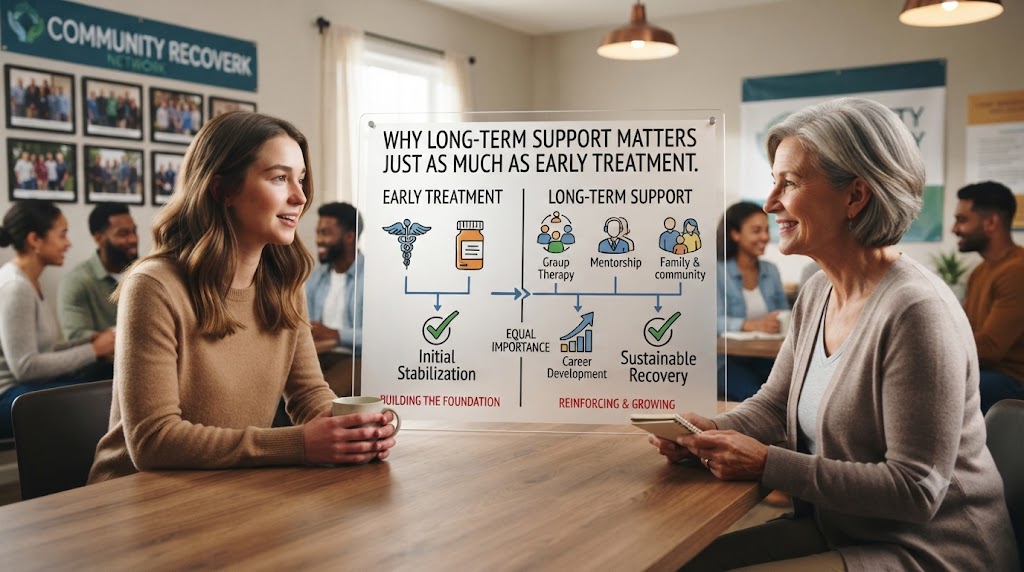
Life After Treatment. Being released from a facility or finishing treatment is just the beginning. Therapy continues post-treatment in different forms like group support and continued checkups from a health care professional are still essential. Dual-diagnosis treatment addresses these needs proactively by anticipating the level of support that clients require without them leaving the center with a one size fits all aftercare treatment plan.
Final Thoughts
In the long run though, addiction can not be fully dealt with without addressing the mental health issue that’s being masked by the addiction. Whole person therapy includes not only dealing with getting clean from substances but the underlying history and emotional hurt that substances were attempting to mask as well. This comprehensive form of care is just what centers such as Harbor Detox are founded on, providing an environment for those individuals who are interested in becoming well in every aspect of their being.
Harbor Detox Contact Information
- Company Name: Harbor Detox
- Phone: (888) 793-8002
- Email: info@harbordetox.com
- Address: 24832 La Paz Ave, Suite A, Dana Point, CA 92629, USA
FAQs
Do I really have both a mental health issue and an addiction, or is it just one causing the other?
Truly, without a thorough assessment by a dual diagnosis treatment professional, it can be difficult to determine on your own. It is very common for anxiety or depression to develop before drug use begins – using a substance in this case acts as a way of self-medicating or coping with mental illness. On the other hand, it is also possible for high-level drug use alone to be a cause of mental health issues.
If I get treated for my addiction, won’t my anxiety or depression get better on its own once I’m sober?
Not necessarily. This is one of the biggest mistakes that are out there. For most people the mental health diagnosis occurred before the substance abuse even began or existed separate from substance use due to some trauma or other element of body chemistry. Successfully abstaining from substance abuse is a massive step and will likely bring that condition under control but an undiagnosed mental illness is going to have to be dealt with separately in most cases.
Will I be on medication forever if I go through dual diagnosis treatment?
Not necessarily, and that really is case-by-case. Certain individuals might require medication long-term or short term; e.g., for short-term stabilization in the early stages, or long term for maintenance the same as people who maintain high blood pressure or diabetes. The treatment team would collaborate with the patient to determine the level necessary, and it would change with time and progress.
I’ve tried regular rehab before and relapsed. Why would this be any different?
So if a treatment program helped you manage your addiction but ignored the cause of it, it’s really no surprise that the help didn’t last. That’s not a sign that you “failed” at that therapy, but rather, that it was a missing link in the methodology. That’s exactly what’s covered in dual diagnosis treatment; so you can heal and go on your way without underlying pain to eventually bring you back to addictive substance use.
Is it normal to feel nervous about opening up about my mental health during treatment?
Absolutely normal and by no means do you stand alone with such feelings, such fears or shame. So many of us enter mental health and dual diagnosis treatment feeling like we have failed a great deal and hide many of our underlying conditions particularly so for the years they have been untreated. Effective dual diagnosis treatment centers nurture feelings of this sort through respect, openness, and support and in the vast majority of centers; the speed at which you reveal such will actually be at your disposal to control.
How long does dual diagnosis treatment typically take?
There isn’t a magic number for that. It depends on how bad the symptoms of both conditions are, on your personal situation and experience, and how you respond to treatment. You might need a short burst of intensive treatment followed by continued but ongoing outpatient treatment. You may need an even longer more spaced out recovery programme. Whatever length the journey it’s not about the speedy race to the finish but whether both issues are really working their way out.
What happens after treatment ends — am I just on my own after that?
No way! If you’re seeing the right program, much of your treatment will include the creation of a plan for when you leave, usually before it ever happens – a program of aftercare: ongoing therapy, attendance in support groups, maybe checking in with a psychiatrist if need be. They’ll plan on you leaving with a life plan.
Can I go through dual diagnosis treatment if I’ve never officially been diagnosed with a mental health condition?
Totally. It’s incredibly common that people come into recovery never having had an official diagnosis for anything outside the drugs/alcohol – they just know that beyond using, something has always felt a bit … Not quite right. And good duel diagnosis treatment centers offer that assessment as a part of the recovery process so you don’t have to continue wondering what you’ve been battling all along.