Medically Reviewed by: Dr. Peter Scheid, M.D. — Board-Certified Addiction Medicine Specialist | Harbor Detox Clinical Advisory Team
When you or somebody who means a lot to you is preparing to quit drugs or alcohol, it is natural to feel anxious about what the next few days will be like. You may have read plenty online, talked to others, or even witnessed another person go through the whole process, but it does not ease your fears. On the bright side, there are certain withdrawal patterns that are well known by healthcare teams who deal with patients suffering from addiction.
So here in this blog, we give you proper information about the first 72 hours of drug withdrawal. So stay tuned for this blog.
Why the First Three Days Matter So Much

The acute withdrawal phase, otherwise known as “the first 72 hours,” is the time when your body is undergoing its toughest fight against the drug that you have been taking before. The severity with which withdrawal symptoms manifest is heavily determined by the substance of abuse. Some people may experience mild withdrawal symptoms, whereas in some cases the withdrawal can develop to a very serious situation. During this phase of withdrawal, the individual is at high risk of relapse, which means that many people will have temptation of using the drug again just to put an end to the discomfort. Aside from relapse, individuals going through this stage may experience serious consequences of drug abuse such as seizures or major heart problems.
A General Timeline: Hour by Hour
| Timeframe | What’s Commonly Experienced |
| 0–8 hours | The first signs of withdrawal symptoms, i.e. anxiety, restlessness, perspiration, as well as intense cravings occur |
| 8–24 hours | Symptoms get worse during the process of withdrawal: nausea, tremors, tachycardia, anxiety, and sleeplessness appear |
| 24–48 hours | At this stage, a person experiences great levels of discomfort and some confusion |
| 48–72 hours | The symptoms will generally peak and then show signs of stabilization or decrease in intensity, however, alcohol and benzodiazepines still add danger to this process |
| Beyond 72 hours | At this stage, the person will only experience some slight discomfort. |
What the Body Is Actually Going Through

If a person takes something over and over again, the brain and body begin to adjust themselves to the substance. But when the substance is no longer available, the nervous system has to adjust itself again, and that is what gives rise to the physical symptoms of withdrawal. Depending on what substance is involved, the symptoms may include a rapid heartbeat, high blood pressure, sweating, shaking, or problems with the gastrointestinal tract.
What the Mind Goes Through at the Same Time
The emotional and psychological symptoms of withdrawal while they may not seem as “real” as physical symptoms, certainly shouldn’t be underestimated as emotional and psychological issues associated with withdrawal can greatly intrude on a recovering user’s life. In the first three days since quitting, a user may undergo emotional issues such as having feelings of anxiety, irritation, sudden changes of mood, difficulty concentrating on things, especially if the sleeping pattern gets disturbed making everything more unpleasant. Cravings may also show up in people’s minds. It is one of the main reasons why people may need professional support, as a clinical team can offer necessary reassurance or even medications if necessary.
Warning Signs That Need Immediate Medical Attention
Loved ones tend to be the first to recognize when something has moved from “uncomfortable” to “unsafe.” Signs to look for that could signal a need for immediate medical assistance are seizures, hallucinations, extreme disorientation or confusion, chest pain, high temperature, or the inability to keep fluids down. Alcohol and benzodiazepine withdrawal should always be taken seriously, since both conditions run the risk of causing seizures or delirium tremens, a life-threatening side effect. If any of the symptoms listed above occur, do not hesitate before seeking immediate help.
How Families Can Help During These First Days
Those we care about usually do have some good intentions but they are just not certain what role to play. Concrete help can mean more than eloquence: “Staying as calm and creating as quiet, non-demanding a space as possible; suggesting regular sips of water and just showing up are also important tools for family members and friends, along with resisting ultimatums, arguments and high-emotion, verbal exchanges during this vulnerable time, when emotional capacity is decreased.” Ultimately, maybe the best help a family can offer is to pursue medical attention, instead of attempting to handle acute withdrawal at home.
Why Medical Detox Changes the Experience
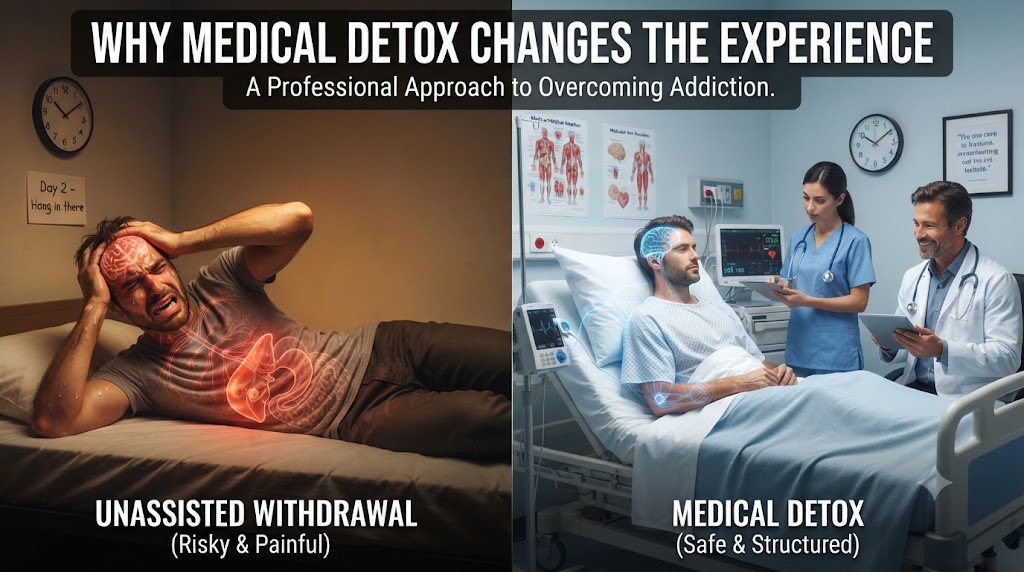
If you can go it alone during the early withdrawal period, a safe place to start might be a hospital or facility where medical staff can keep an eye on your vital signs and administer necessary medication if needed. Medical facilities also help ease the uncertainty for you and your family in knowing when you or another individual may need medical assistance because something is going drastically wrong.
Moving Forward After the First 72 Hours
Making it past the acute alcohol withdrawal stage is huge, but that is the start of recovery – not the end. As the body stabilizes, then the work of dealing with the factors that caused the addiction can start with therapy, a support system and a structured environment. A total care system from detox to residential treatment, to aftercare, provides a bridge from a temporary pause to a long, fulfilling life.
For some people, an emotional support animal can also provide companionship, comfort, and a sense of routine as they move forward in recovery. An ESA letter may help individuals who qualify for an emotional support animal obtain documentation for their needs. The Supportive Pet offers ESA letter for those seeking this type of support, complementing-not replacing-professional treatment, therapy, and aftercare.
Conclusion
Withdrawal can be tough during the initial 72 hours; however, it does not have to be completed in isolation or without a strategy in place. It is important for patients and their family to have an idea of what they may expect during withdrawal in order to convert fear into actions based on knowledge. By knowing the signs of trouble at the beginning, it is possible to save a patient’s life. Every patient is watched and assisted by our medical team at Harbor Detox for the whole period.
Contact Details
Company Name – Harbor Detox
Address – Medically Reviewed by: Dr. Peter Scheid, M.D. — Board-Certified Addiction Medicine Specialist | Harbor Detox Clinical Advisory Team
Phone No. – (888) 793-8002
Email Id – info@harbordetox.com
FAQs
Is it normal to feel scared about going through withdrawal?
That’s absolutely right and I know a lot of people feel the same way! The ‘what ifs’ are a huge part of the reason people are scared to seek treatment in the first place and by giving you information on how things will proceed and support during treatment, it reduces the guesswork which reduces fear!
How long will the worst part actually last?
Generally, for many substances, the worst effects of withdrawal are typically experienced in the first 1-2 days, and begin to dissipate by day 3; although everyone’s timeline may vary slightly due to the type of substance that was abused and an individual’s personal health status.
Can I just detox at home instead of going somewhere?
There are understandable reasons to desire to be in a familiar environment. However, detoxing at home, without any medical care, can be dangerous, particularly with alcohol and benzodiazepines, in which there is a chance of serious complications arising. A monitored environment means that someone is there to look for signs of trouble and intervene if there are any changes.
What if my loved one says they want to stop treatment halfway through?
This occurs more frequently than most people realize, especially during peak moments of craving or discomfort. However, it does not indicate that the process is failing. That’s why medical detox is available, as trained professionals are able to help ease a person’s desire to leave treatment in addition to providing treatment during traumatic moments.
How will I know if it’s a real emergency and not just normal withdrawal?
Although trusting your gut is wise, also be on the alert for signs and symptoms: Seizures, disorientation or hallucinations, pain in your chest, a very high fever or the inability to drink any fluids without vomiting or being sick. If those symptoms manifest, don’t play waiting games at home – get immediate emergency medical assistance.
Will medication be used to help with the symptoms?
In most situations, yes. Detoxification medical teams commonly administer medications for nausea, anxiety, insomnia, and to avoid serious issues such as seizures. The medications they may use vary by substance and personal health history.
What can I do as a family member if I can’t be there in person?
Remind yourself that you’re a safe person for them to communicate with even if you can’t be there in person by being quiet and calm on the phone, refraining from guilt or judgment, and just letting them know you support them. If your loved one agrees to share it, you can get more directly involved with communication with the treatment team yourself and fill in the gaps from your end.
Does getting through the first 72 hours mean the hardest part is over?
This is a significant first step for many individuals, but it is the starting point and not the destination. After the body is medically stabilized, the individual will begin to tackle the emotional and behavioural challenges of recovery, and that is typically when organized treatment, therapy and follow-up care become most critical.