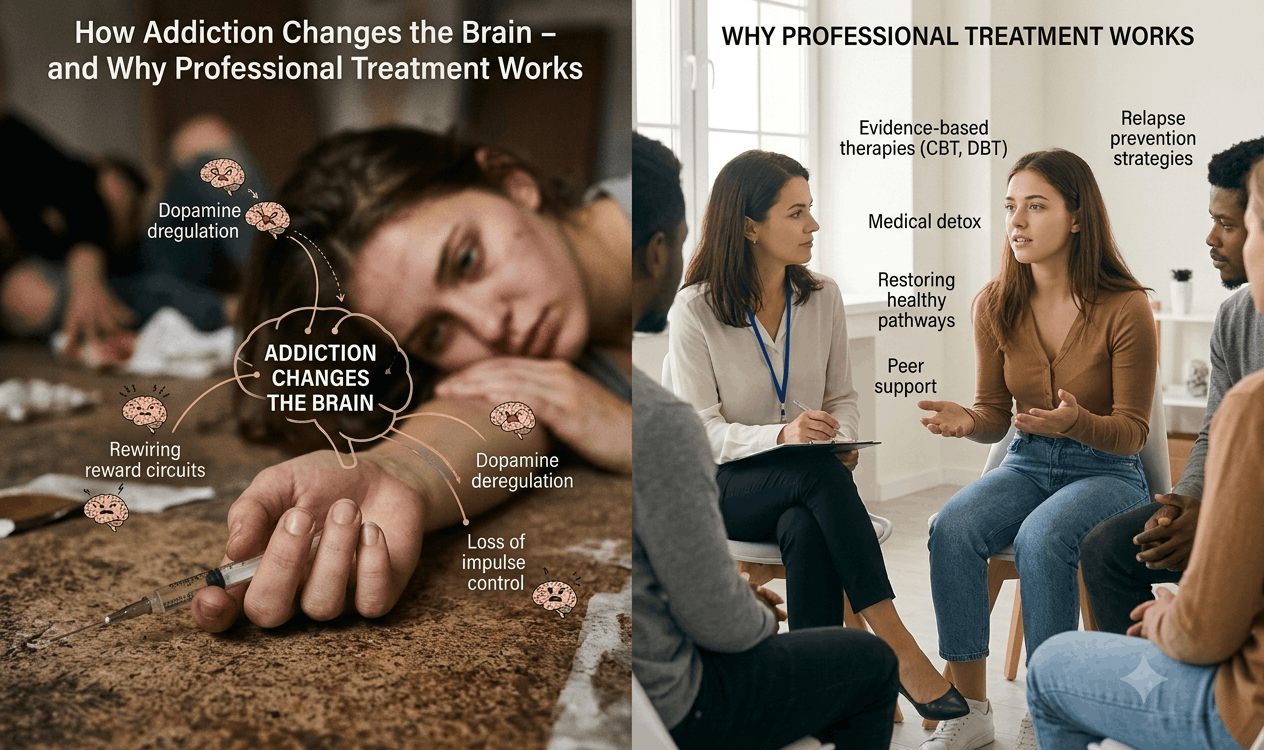
Addiction shouldn’t be seen only as a lack of willpower or a poor decision. It is a complex disease that modifies the brain’s functioning. These modifications have repercussions for a person’s reasoning and emotions as well as for choosing and controlling his or her actions. Hence, many individuals find it difficult to stop abusing drugs even if they truly wish to quit.
The reality is that the brain can be healed. Given the right support, treatment, and time, brain functions can be restored. Treatment allows people to get all of the needed medical care, therapy, and guidance during their road to recovery.
In this blog, we will talk about How Addiction Changes the Brain—and Why Professional Treatment Works.
Addiction as a brain disease
The brain does everything we do, from controlling our feelings, thoughts, decisions, and even actions. Substances such as drugs and alcohol change how the cells of the brain communicate.
Different drugs bring about increased release of dopamine within the body. Dopamine is the “happy” chemical produced when we do the right things, like eat, exercise and stay with people we love. Drugs tend to give us greater amounts of dopamine as compared to the natural physical activities that bring us joy.
With time, a person can get to the point where they can no longer do anything else and be able to enjoy it without drugs.
How Addiction Affects the Brain
1. The Reward System Gets Rewired
The reward system in the brain serves the purpose of reinforcing positive behaviors. The process of getting addicted disrupts the normal functioning of this system by making the exposed substance seem like the top-most priority.
As a result of addiction
- The brain constantly craves the substance.
- Ordinary activities do not bring any pleasure anymore.
- The utilization of the substance becomes a driving force even though there are negative consequences.
As a result seeking the substance and consuming it becomes the predominant thought of the brain.
2. Self-Control is Compromised
The prefrontal cortex of the brain is responsible for:
- making decisions
- controlling oneself
- planning
- solving problems
- assessing the outcomes of one’s actions
Addiction damages this part of the brain, hence making it almost impossible to resist cravings.
3. It Affects Memory and Learning
The brain retains information about experiences involving drug usage. Particular locations, individuals, scents, or anxiety-inducing situations may lead to urges because of the brain’s memories about previous substance use. Such memories can linger strongly even after stopping the use of a drug and become a reason for relapse if proper addiction treatment hasn’t been provided.
4. It Causes Stress and Anxiousness
The long-term use of substances affects the brain’s stress mechanism.
After a while, people may suffer from:
- Nervousness
- Unstable mood
- Depression
- Inability to be calm
- Instability in behavior
Instead of finding pleasure through consumption, people choose consumption in cases of unhappiness.
5. It Allows for Developing Tolerance and Addiction
When the brain gets used to consuming certain drugs, the same quantity of substances produces no effect.
Such a process results in the following:
- Need for larger quantities
- Physical addiction (the body expects the substance)
- Symptoms related to stopping its use
The withdrawal process can vary from being troublesome to dangerous depending on the particular drug.
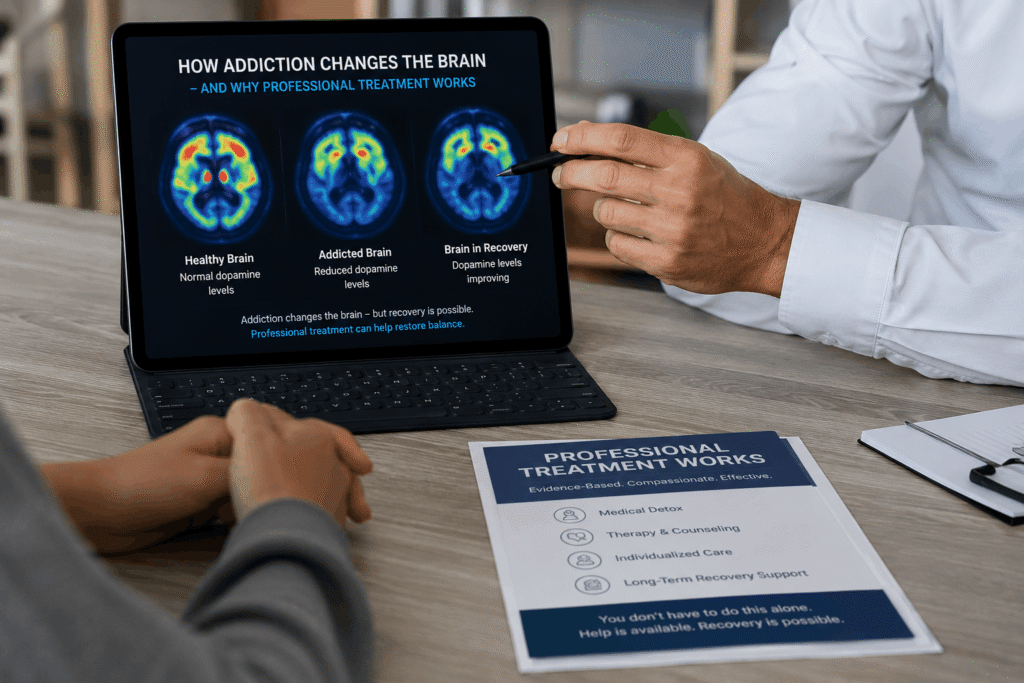
Is Recovery Possible for the Brain?
One of the most positive things about recovery, especially when it comes to the recovery of the brain, is the fact that the brain is able to heal itself along the lines of neuroplasticity, which means that the brain is capable of creating new connections and fixing damaged areas over time.
Although recovery does not occur immediately, improvements will be manifested at some point in time. Some changes can take weeks, while some take months or years to finally take shape.
The longer one is sober, the more chances the brain has to recover.
Why Professional Treatment Is Effective
Addiction alters the brain, which is why recovery needs more than just willpower.
Professional programs focus on both the physical and mental sides of the problem.
1. Secure Medical Detox
Detoxification is often the first step in treatment. Doctors will oversee withdrawal symptoms and give medication when necessary to minimize health risks.
2. The Effectiveness of Therapy in Adapting Our Thought Patterns
Therapy has various forms to assist individuals in developing new behaviors.
Some of the most effective ones are:
- CBT
- Motivational Therapy
- DBT
- Trauma Therapy
These forms of therapy stimulate healthy coping behaviors and lead to an improvement in emotional control and decreased chances of relapse.
3. The Causes of Addiction are Uncovered
One cannot forget the “co-occurrence” of problems that exist alongside addiction.
Experts have identified several factors that may form the basis of addiction:
- Traumatic events
- Anxiety
- Depression
- Issues in the family
- Stress
- Low self-esteem
Despite all challenges making a correct diagnosis will make recovery easier.
4. Medications Can Facilitate Healing
For some addictions, medication can improve the results of a program. Depending on the individual patient and the addiction severity, the following medications may be used;
- Decrease the need to use in cravings
- Reduce or ease the signs of withdrawal
- Help reduce relapse
- Decrease the craving ability to control or stabilize your brain’s chemistry
These will not be prescribed or used by an unlicensed professional and can often be incorporated in addition to an individually programmed therapy style
5. Lifestyle Choices Assist in Brain Healing.
As part of the addiction recovery program, there will also be emphasis on choices that are supportive of the brain’s healing processes,
These are as follows
- Eating nutritious food
- Providing a high degree of exercise
- Adequate sleep
- Reducing stress
- Practicing meditation
- Mindful living
Creating structure into the schedule you adhere to to provide and regulate balance
6. Ongoing Support Facilitates Recovery
Support systems strengthen long-term recovery. Recovery occurs easier on people with an open and available support system that does not disappear once you complete a 30-, 60-, or 90-day treatment program. Support systems come in many forms
- Group therapy
- family therapy
- Peer support groups
- Planning
- Aftercare sessions in long-term recovery programs.
Relapse Does Not Mean The Treatment Plan Failed
If You Suffer From Substance Addiction As the addiction takes its toll on the function of the brain, this can prolong cravings or urges. When going through difficult times with trauma or stress, these previously instilled brain patterns can be reactivated. Experts consider whether the plan used during treatment may need some alteration or if therapy needs to resume rather than be abandoned. It is not too late even if you relapsed. Many have succeeded in sustained recovery even after this hurdle.
In conclusion
These changes impact a person’s ability to make choices, manage emotions, experience motivation, and control behavior. That’s why it’s so much harder to stop using drugs and alcohol than when a person actually decides that he or she wants to do so. “We’re in an era when we understand we need and have resources that make that an incredible positive experience to have people recover.
It’s also an era that we realize you really need those kinds of integrated treatments for the whole person not just to stop drugs, but to turn the brain back on. It doesn’t look the way it should look but you can recover a functional brain,” noted Dr. George Wood. The brain can heal and with care and help “there’s such amazing capacity.” Recovery is a process: “Recovery IS a possibility’ not that it is an easy road not a quick fix.
Harbor Detox provides the best recovery for people who are dealing with addictions. We provide the best healing programs that help the individual in their journey towards healing. Feeel free to contact them for any help of program needed for the people.
Harbor Detox Contact Information
Website: Harbor Detox
Phone: (888) 793-8002
Email: info@harbordetox.com
Address: 24832 La Paz Ave, Suite A, Dana Point, CA 92629, USA
Frequently Asked Questions
1. What does addiction do to the brain?
Addiction rewires the brain’s reward, decision-making, memory, and stress system, thus complicating recovery.
2. Can the brain heal after addiction?
Yes, the brain can recover over time through neuroplasticity (when the brain rebuilds itself), particularly through abstinence or professional therapy for prolonged periods of sobriety.
3. Why is professional addiction treatment needed?
Professional treatment helps through safe withdrawal, medically supervising you when you are experiencing withdrawal, managing the symptoms of withdrawal, and helping you understand the reasons for the addiction.
4. What types of therapies are available in professional addiction treatment?
Commonly used therapies include CBT, DBT, Motivational Interviewing, group counseling, and family counseling.
5. Does everyone need medical detox?
No, but those who are addicted to alcohol, opioids or benzodiazepines often do need medical detox.
6. Is relapse evidence of treatment failure?
No, for many people, relapse can be a step in the recovery process and can inform what modifications the treatment and support need.
7. Does addiction permanently harm the brain?
Some effects are more lasting than others. However, recovery from addiction can bring major improvements.